

Implicit Bias Training
Welcome! AFO Selection Committee members are a diverse and intelligent group of individuals who make important decisions on behalf of our organization. From Scholarship selection to Fellowships, Honored Citizen, Oregon’s Next, and more, the committees’ decisions often make life-long impacts on community members of all ages and backgrounds in Oregon and beyond.
AFO believes that the designed and built environment can address our most challenging problems, and that Oregon is stronger when more people from diverse backgrounds participate in designing the places that shape our world (read our full Equity Statement). Therefore, it is our duty to equip our Selection Committees with the right tools to make equitable and informed decisions, free of discrimination, prejudice, and racism.
Thank you for serving in a highly influential and important role as we work to expand access and visibility for those underrepresented in design and building fields and recognize emerging and established leaders for the community-centered work that they do.
Prelude
The following resources aim to prepare you for selecting award recipients in partnership with AFO. We ask committee members to build self-awareness around negative and positive implicit bias and how it may affect your ranking of candidates. This will help us work toward more informed and equitable decision making.
We recognize that participating in this training can bring feelings of discomfort, guilt, and reflection. We recommend that you acknowledge and learn from these feelings as you move through the training. With that in mind, if the resources bring triggering or harmful reactions, please feel empowered to discontinue the work and inform AFO staff. We do not wish to cause harm to our community and appreciate your feedback.
We encourage you to get situated in a comfortable and quiet space before proceeding.
Questions & Feedback
Contact:
Candice Agahan
Director of Community Engagement
candice@af-oregon.org
503-542-3823
Part 1: What is Implicit Bias?
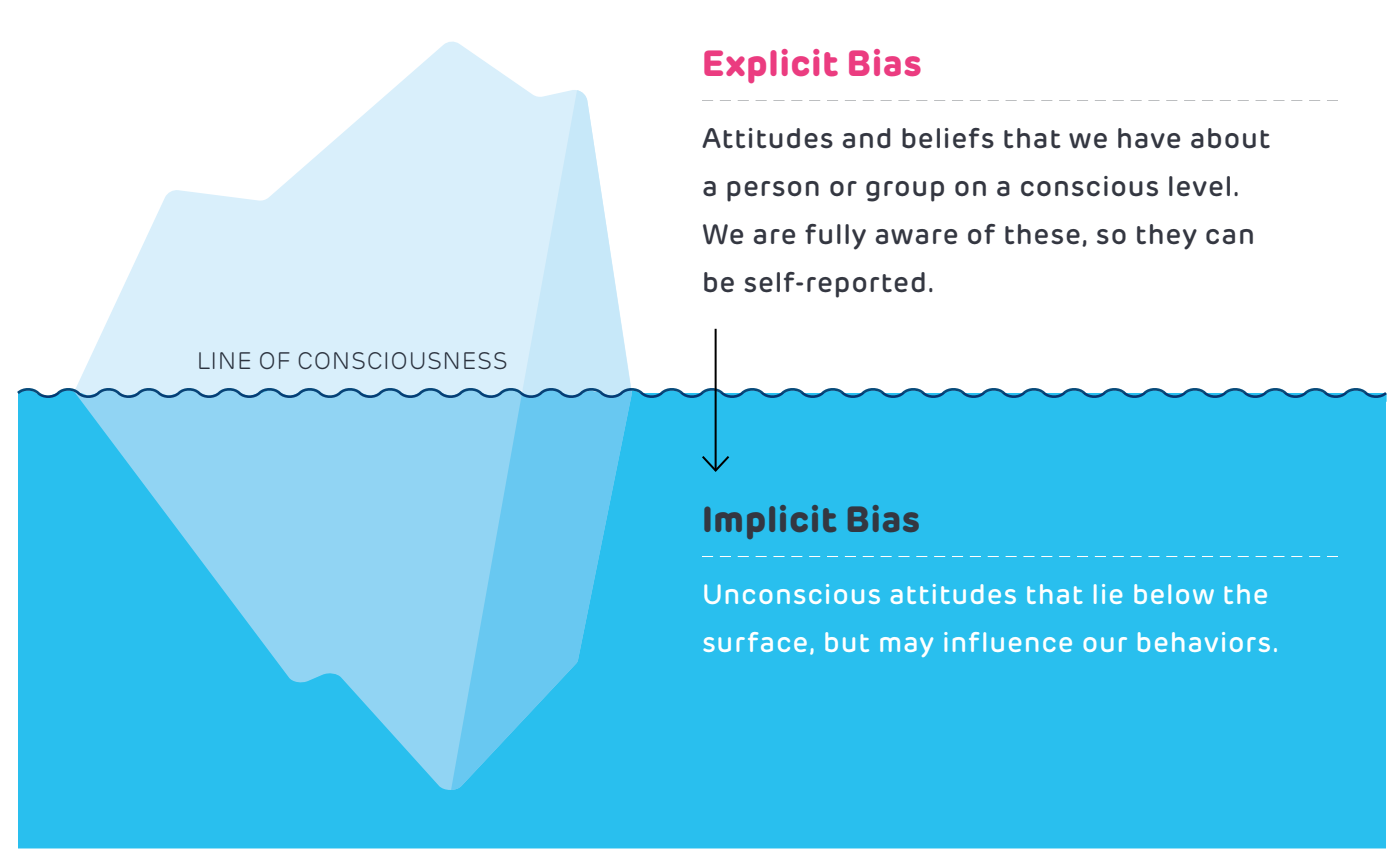
“Implicit bias refers to the stereotypes, biases, and attitudes we unconsciously hold that influence our actions, understanding and decisions. They can be helpful in that they allow us to quickly make decisions, and in other situations, they can be unhelpful in that they allow us to unconsciously exclude, marginalize, or devalue others. We must therefore become aware of our unintentional applied biases and work towards more inclusivity.” (NASFAA).
Please watch the following videos:
Implicit Bias: Peanut Butter, Jelly and Racism by the New York Times (2:26 minutes)
Implicit Bias: Check Our Bias to Wreck Our Bias by the New York Times (3:00 minutes)
Implicit Bias Defined by National Education Association (2:44 minute video)
We all have implicit biases. So what can we do about it? by Dushaw Hockett, TEDxMidAtlanticSalon (12:00 minutes)
Part 2: Implicit Bias Countermeasures
Ways to reduce the impact of unconscious bias when reviewing applications (adapted from University of Wisconsin–Madison):
- Before you start reviewing your applications, take a moment to engage in counter-stereotype imaging (i.e. imagine a woman who is a CEO). This will help reduce the influence of assumptions based on common stereotypes.
- Take your time when reviewing applicants. Biases can be intensified when individuals are in a rush, mentally drained, or even hungry.
- Take breaks and consider reviewing your initial evaluations at a later time and from a different perspective. This will give you the opportunity to see the applications with “fresher eyes” and a slightly more objective point of view.
- Treat every applicant as an individual and evaluate their entire application qualifications instead of focusing on the groups to which they belong.
- When reviewing applicants who may be from a different background than your own, take time to consider the similarities you may have with the applicant. While you cannot change your negative biases towards people that are not part of your in-group, you can expand your in-group to include more people.
- Discuss your evaluation decisions with other committee members and justify why you accepted or rejected each applicant.
- Tell your other committee members of any biases you have been previously made aware of and ask them to hold you accountable if they notice this bias in your evaluations. Be cognitive about your own bias and reflect.
Please watch:
Implicit Bias: Snacks & Punishment by the New York Times (2:05 minutes)
Please complete:
Personal Self-Assessment of Antibias Behavior Worksheet by Anti-Defamation League
Remember!
The goal is not to pretend we can eliminate all bias. The goal is to build a culture where people can question themselves, one another, and the process without defensiveness, in order to work toward equitable outcomes.

Part 3: Optional Deep Dive
- Take an Implicit Association Test by Project Implicit – try a new one if you’ve taken one before
- Read A Gardener’s Tale by Camara Jones, MD, MPH, Ph.D. (5 minutes)
- Watch Homegirls’ guide to being powerful by Rukaiyah Adams, TEDxMtHood (14:05 minutes)
- Watch Stop Speeding: Unraveling Implicit Bias in Our Everyday Lives by Laila Smith, TEDxNewHaven (6:48 minutes)
Diversity in the Design and Building Industry
Racial and gender disparity continues to be rampant in architecture, engineering, and construction fields. White men make up a majority of the industry, especially when it comes to leadership and higher-paid positions. The past decade has shown increases in the amount of women entering the field and in racial diversity. Demographic information about other marginalized groups including LGBTQIA+ and disabled communities are for the most part unknown.
Architecture
Engineering
- ASCE – Demographic Profile Report (2020)
- ASCE/SEI Young Professionals Committee – Gender and Racial Diversity in the Structural Engineering Profession (2013)
- NCSES – Representation of Demographic Groups in STEM (2024)
Construction
- U.S. EEOC – Building for the Future (2023)
- U.S. Bureau of Labor Statistics – The Construction Industry (2022)
Have additional resources to share? Send them to Candice Agahan, AFO Director of Community Engagement, candice@af-oregon.org.
